 Patriots of Color
Patriots of Color
Brief summaries of "Patriots of Color," (with permission) from Copyrighted "Volumes 1 & 2" of the extensive "Patriot Chronicles" series compiled and written by: George Quintal Jr. The service of "Patriots of Color" rendered to the United States of America must not be forgotten, but remain as an essential part of America's heritage and history.
Contents:
Patriots of Color© - By George Quintal Jr.
James Armistead - Virginia slave, working with General Marquis de Lafayette as a spy - By Wallbuilders
(See also: Services of Colored Americans, in the Wars of 1776 and 1812 & The Colored Patriots of the American Revolution By William C. Nell, And The Negro in the American Revolution by Benjamin Quarles)
 Home
About
Contact
Search
News,
Commentary, & Action
Recommended Books
Home
About
Contact
Search
News,
Commentary, & Action
Recommended Books
|
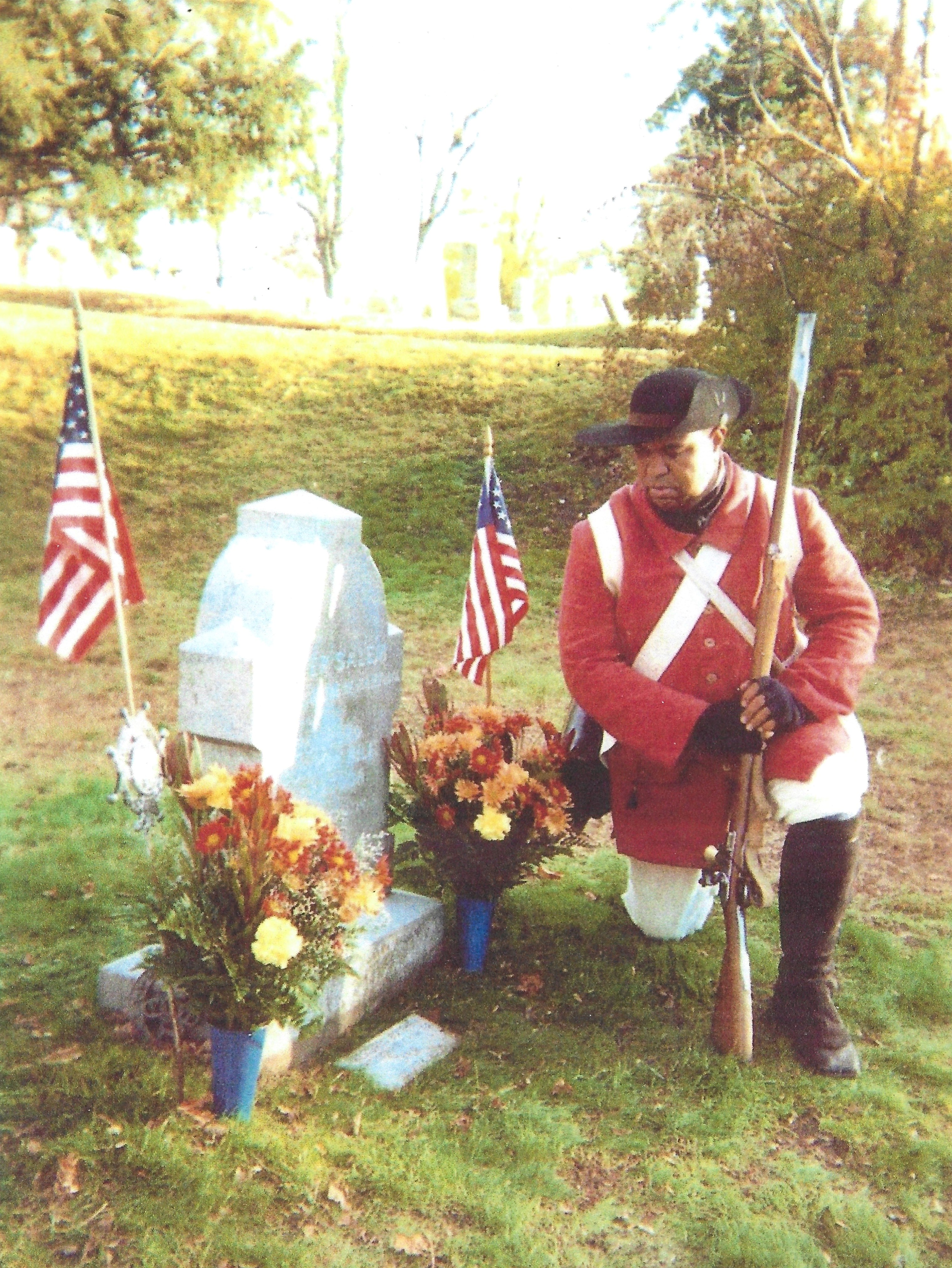
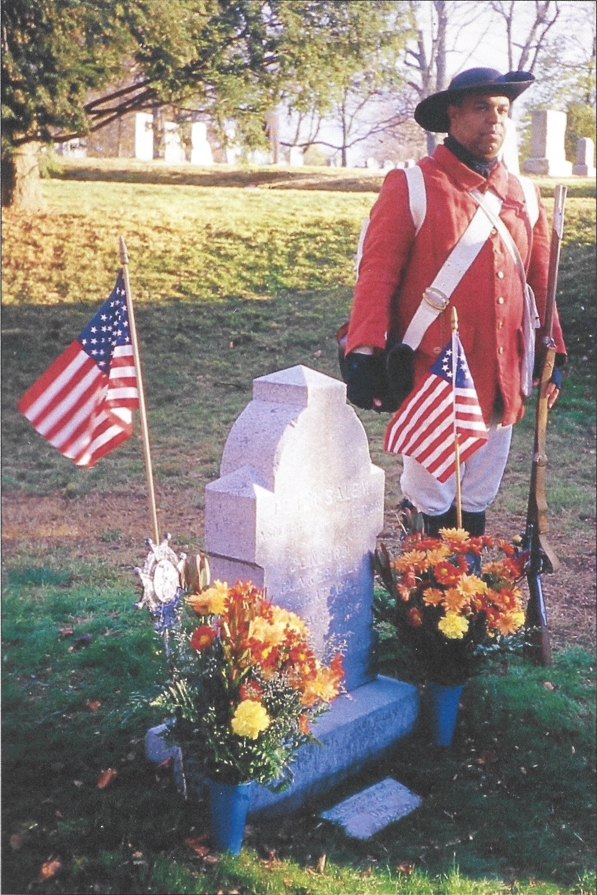
Patriots of Color at Battle Road
|
Copyright © George Quintal Jr.
All Rights Reserved
Only Version Authorized by the Author. Please do not purchase/access/cite outdated or pirated versions. |
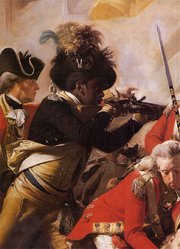
Patriots of Color at Bunker Hill And the Siege of Boston 17 June 1775
|
Short biographies of "Patriots of Color"
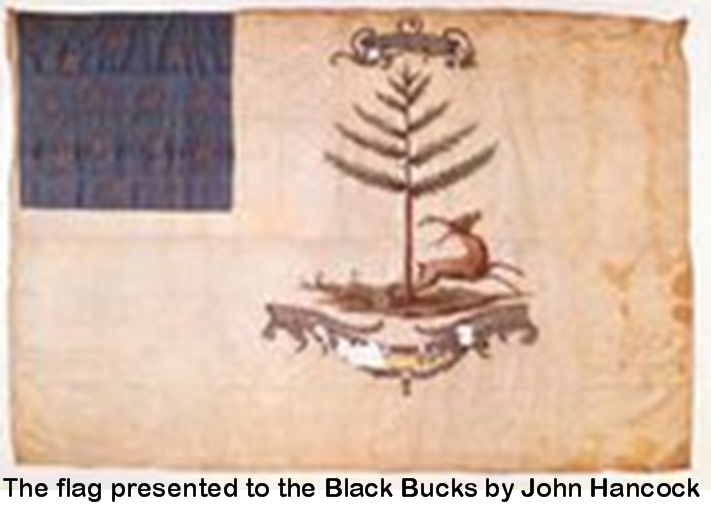
In addition to the integrated units, there were also three all Black units that served: the Rhode Island First regiment, who fought with distinction at Newport, Monmouth and Yorktown; the Black Bucks of America, a Massachusetts regiment whose banner is still on display at the Massachusetts Historical Society; and the Volunteer Chasseurs, a regiment from Haiti brought over by our French allies. The latter unit took the ideas of liberty back to Haiti with them. Those ideas were used to overthrow their French masters and create the second republic in the Americas.
Regarding "Patriots of Color at
Bunker Hill," the late Dr. Alfred F. Young, Senior Research Fellow, Newberry
Library, Chicago (2002) in the Preface states:
“Every once in a while a
piece of scholarship comes along that changes the way you look at a historical
event. The prevailing wisdom about the Battle of Bunker Hill is that only a
handful of African American soldiers were there. After almost three years of
research George Quintal reports that there very likely were 103 “patriots of
color” at Bunker Hill (and may have been as many as 150).
…Quintal is not an historian of black history. A
native of Maine, he began his foray into common soldiers almost three decades
ago in pursuit of twelve of his own ancestors who were in the Revolutionary War.
He is a self-taught genealogist and military researcher, skilled as a computer
specialist. Beginning with an interest in the expedition to Canada led by
Benedict Arnold, he moved into the Battles of Bunker Hill and Saratoga. Then he
began to read systematically the 2670 microfilm reels of pension applications
filed by veterans in 1820 and 1832, a huge treasure trove of evidence about the
ordinary soldiers, largely unmined by historians. The scope of his research on
the patriots of color at Bunker Hill and Battle Road is staggering.”
From the Introduction of Patriots of Color at Bunker
Hill Mr. Quintal explains: “While the stories of handfuls of soldiers
of color (such as PETER SALEM) have often been told, this project has restored
those stories, added to them significantly and presented the new stories of many
other men of color who served at Bunker Hill. Much has been learned during this
effort about the individual lives of those men such as their status
(slave/free), their age, where they served, how they lived, who they married,
where they resided and where they died. One of the ways that I try to honor
these men is to attempt to trace their family genealogies down to their
grandchildren, to possibly link the distant past with a descendant in the
present.
…A large number of the men who responded to the
Lexington Alarm, including the men of color, set up camp at Cambridge Common and
Harvard College. They were encouraged to stay on duty and most became
eight-month’s men, due to their agreed term of service. A land encirclement of
British-held Boston was instituted, an action called the Siege of Boston. Next
came the Battle of Bunker Hill on 17 June 1775. Less than a month later, on 3
July, George Washington took command in Cambridge and set to work to ultimately
transform these rag-tag farmer/soldiers into disciplined fighters in the
Continental Army, Significant numbers of the soldiers of color in this great
mass of Patriots had the newly-minted status of ‘free man.’ An irrepressible
spirit of liberty was in the air. What a time to have been alive!”
Below, discover summaries of but a few "Patriots of
Color."
Caesar Augustus -
Augustus was the last colonist wounded in the
Battle of Lexington. He was from Dorchester,
Massachusetts.
Prince Easterbrooks
-
Prince Easterbrooks was also known as
Estabrook. In the very first battle of the
American Revolution, the Battle of Lexington,
there were no fewer than ten black patriots.
Easterbrooks was one of them. He served under
Captain John Parker, the first to engage in the
war. He was wounded when the British forces
fired upon the citizens of the town. He was
mentioned in the Salem Gazette or Newberry and
Marblehead Advertiser for April 21, 1775, as
a "Negro man" who was "wounded (Lexington) ." Salem did not serve alone in this battle.
Salem Poor, Prince Hall, and Philip Abbott also
distinguished themselves in this battle. Salem
is considered one of the heroes of Bunker Hill.
He had 14 accommodations that day for his acts
of bravery and was acknowledge as a great leader
of men. He received his honors before Washington
himself. "A negro man belonging to Groton, took aim at
Major Pitcairn, as he was rallying the dispersed
British Troops, and shot him through the head,
he was brought over to Boston and died as he was
landing on the ferry ways. It has long been
known that Pitcairn was killed by a negro, but
this is the first time perhaps that he has ever
been connected to Groton." ~ Groton Historical Series by Dr. Samuel A.
Green, Vol IV, 1899, p. 259 Salem joined the Fifth Massachusetts Regiment
and served in the battles of Concord and
Saratoga. He served for seven years, a length of
time few other soldiers could match. Though a
slave at the beginning of his service, he was
a free man by the end. At the end of the war, in
1783, he married. In honor of his service, Salem was given a
wool bounty coat.
Poor fought in the Battle of Bunker Hill in
Colonel Frye's Regiment and is credited with
shooting British Lt. Col. James Abercrombie. He
conducted himself so well during the battle,
that no less that 14 officers, including Colonel
William Prescott himself, petitioned the
legislature of Massachusetts declaring that Poor
had behaved like an experienced officer and
brave soldier and "a reward was due to so great
and distinguished a character." Of all the men
who served in the battle, Poor was the only one
singled out for such an honor. What he did
specifically to earn such praise is unknown, as
the petition states, "to set forth the
particulars of his conduct would be tedious."
Some historians think this indicates that Poor's
acts of bravery were too numerous to lay out. Poor also fought in the Battle of Saratoga,
which was the turning point of the war, and at
the Battle of Monmouth. He was honored with a U.S. postage stamp.
Phillip Abbot - Abbot was a servant to the family of
Nathaniel Abbot of Andover, Massachusetts. When
Nathaniel Abbot's men were called to the Battle
of Bunker Hill, Phillip Abbot fought and died
along side them. Jack Arabus - Jack Arabus was a slave of a wealthy
Connecticut merchant. As was common in those
days, a person could pay someone to take their
place in the military. Arabus' owner offered him
his freedom if he would fight in the place of
the merchant's son. Arabus accepted the offer
and found in the American Revolution. Sadly,
upon his return from war, his master changed his
mind. Arabus decided to take matters into his own
hand and ran away. He was not free for long. He
was captured the next day and put in jail in New
Haven. His master sued for his return, but
Arabus had a defender. The Yale educated lawyer,
Chauncey Goodrich, took on his case. He won. The
judge ruled that Arabus was free the moment he
went to fight. The agreement did not matter.
This case enabled hundred of enslaved black
patriots to win their own freedom as they had
won their country's Charles Bowles - Bowles was born in Boston in 1761. He was
mixed race, his father was an African and his
mother was the daughter of Colonel Morgan. At
the age of 14, Bowles enlisted in the
Continental Army. Her served during the entire
length of the war. His first two years he spent
in the service of an officer, but then
reenlisted to fight. After the war, he moved to
New Hampshire and became a farmer. There is a
story that he had been a slave to a Tory family,
but that would not be correct if his mother was
white. He might have been a servant.
After the war, Bustill and his wife, who also
mixed race - the daughter of an Englishman and a
Delaware Indian, moved to Philadelphia. There
they and their eight children attended Quaker
meetings. Bustill was also an early member of
the Free African Society which began in 1787.
This is the society established by black
Founders Richard Allen and Absalom Jones. When
Bustill retired as a baker, he opened a school.
He dies in 1806. Oliver Cromwell - Oliver Cromwell was born in the colony of New
Jersey, near Burlington. There seems to be some
confusion on his birth date. One source has it
as May 24, 1753, while another puts it in 1752.
He was light skinned, a farmer, and was raised
by the family of John Hutchin. It is possible
that he was born a free black. He served in the second New Jersey regiment
under Captain Lowery and and Colonel Israel
Shreve. He served in the battles of Trenton,
Princeton, Brandywine, Monmouth, and Yorktown.
He made the famous crossing of the Delaware on
December 25, 1776. George Washington personally signed
Cromwell's discharge papers at the end of the
war. Washington also designed a medal which was
presented to Cromwell. He later applied for a
pension as a veteran. He could not read or
write, but he was very well liked in the
community of Burlington. Local lawyers, judges,
and politicians helped him to get the pension of
$96 a year. Cromwell purchased a 100 acre farm,
fathered 14 children, and moved into Burlington
in his later years. He outlived 8 of his
children, and died when he was 100 years old. He
is buried in the Methodist churchyard in
Burlington, where some of his descendants still
live. Fraunces is also known to have helped feed
the 13,000 American prisoners of war kept around
New York City, including those kept on the
notorious prison ships. Fraunces and his wife, Elizabeth Dailey, had
seven children, one by the name of Elizabeth,
but called Phoebe. During the Revolution,
Washington came to stay at a place called
Mortier House in New York Cith. He wrote to ask
Fraunces to find for him a housekeeper. Fraunces
sent his daughter Phoebe. It is possible that he
sent her because he had heard a rumor that an
attempt was to be made on Washington's life, or
it may be that Phoebe discovered this plot while
working at Mortier House. Either way, one of
Washington's body guards, Thomas Hickey, was
executed for attempting to poison the general.
Phoebe and her father are credited with
discovering the plot, and Fraunces is credited
with removing the poisoned peas intended for
Washington's dinner. Phoebe was ten years old at
the time of Hickey's execution in June of 1776. Finally, the British were able to capture the
fort. A British captain asked who was in charge
of the fort. Colonel William Ledyard answered,
"I did once. You do now." As he stepped forward
he offered his sword to the British officer, a
sign of surrender. The officer took
Ledyard's sword and thrust it into his body to
the hilt. “Lambert . . . retaliated upon the
[British] officer by thrusting his bayonet
through his body. Lambert, in return, received
from the enemy thirty-three bayonet wounds, and
thus fell, nobly avenging the death of his
commander.” The British response to the death of their
captain and other officers was to slaughter
every man, including Freeman. A plaque at the
fort honors these men for their bravery. Freeman had been the slave of Ledyard, but
had been freed. Freeman stayed living near his
former master, married, and enlisted when the
fighting began, serving side-by-side with his
former master.
A month after the Boston Massacre, Hall was
freed by his master, his certificate of
manumission stating he was "no longer Reckoned a
slave, but [had] always accounted as a free
man." Hall then worked as a peddler, caterer and
leather dresser. He was even listed as a voter
and a taxpayer. He owned a small house and
leather workshop in Boston. Did he fight? There were six men in
Massachusetts named Prince Hall, but it is
believed that he was the Prince Hall that served
in the Battle of Bunker Hill. He also supplied
leather drum heads to the Continental Army, as a
bill he sent to Colonel Crafts in April of 1777
shows. Before the war began, Hall and 14 other free
black men had joined the British Army Lodge of
Masons. When the British retreated from Boston,
these men formed their own lodge, the African
Lodge #1, which was later renamed in Hall's
honor. it took 12 years to get the official
charter. Hall was the first Grand Master. This
lodge was the first ever black lodge. Hall became one of Boston's most prominent
citizens and a leader in the black community. He
spoke out against slavery and the denial of the
rights of blacks. After years of complaining of
the lack of schools for black children, he set
one up in his own home. In his last published
speech, at the lodge in 1797, he spoke out
against violence. "Patience, I say; for were we not possessed
of a great measure of it, we could not bear up
under the daily insults we meet with in the
streets of Boston, much more on public days of
recreation. How, at such times, are we
shamefully abused, and that to such a degree,
that we may truly be said to carry our lives in
our hands, and the arrows of death are flying
about our heads....tis not for want of courage
in you, for they know that they dare not face
you man for man, but in a mob, which we
despise..." He died in 1807. It was a year after his
death that the lodge he founded decided to honor
him by renaming itself The Prince Hall Grand
Lodge. When his indenture ended in 1774, Haynes
enlisted as a "Minuteman" in his local militia.
Though he did not fight in the Battle of
Lexington, he did write a ballad-sermon about
it. The poem dicussed the conflict between
slavery and freedom but did not address black
slavery. He took part in the Siege of Boston and
the expedition to Fort Ticonderoga led by Ethan
Allen and the Green Mountain Boys. After the war, Haynes had an opportunity to
study at Dartmouth College. He turned it down.
Instead he took up the study of Latin and Greek
with a Connecticut clergyman. By 1780, he was
able to receive his license to preach. His first
congregation was a white one in Middle
Granville. He eventually presided over white and
mixed congregations in four different states,
including New York and Massachusetts. Later he
married a white school teacher by the name of
Elizabeth Babbitt. He was ordained in the
Congregationalist Church in 1785, the first
black to be so by a mainstream protestant
church. For more than 30 years, Haynes presided over
a mostly white church in Rutland, Vermont.
During his time there, he developed an
international reputation as a preacher and a
writer. In 1801, he published a track called
"The Nature and Importance of True
Republicanism." This contained his only
published statement on race and slavery. He did
argue for the abolition of slavery by arguing
that it denied black men their rights to "life,
liberty, and the pursuit of happiness." He also
said, "Liberty is equally as precious to a black
man, as it is to a white one, and bondage as
equally as intolerable to the one as it is to
the other". In 1804, he became the first black
man in America to receive a masters degree,
earning it from Middlebury College. He was also
a friend and counselor to the presidents of
Harvard and Yale universities. Haynes left Rutland in 1818 due to conflicts
over politics, Haynes was a fervent Federalist,
and style. Sadly, after living and working with
the people of Rutland for 30 years, there was
speculation that the departure was due to his
race. Haynes final appointment to a church was in
Manchester, Vermont. There he counseled two men
who were condemned to death for murder. Their
convictions were overturned when their victim
reappeared quite alive. Haynes wrote a best
seller about the seven year ordeal. The book
stayed a best seller for a decade. During the last decade of his life, Haynes
ministered to a church in New York. He died in
1833, at the age of 80. His tombstone read, “Here lies the dust of a poor hell deserving
sinner, who ventured into eternity trusting
wholly on the merits of Christ for salvation. In
the full belief of the great doctrines he
preached while on earth, he invites his
children, and all who read this, to trust their
eternal interest on the same foundation.” Haynes was a great admirer of George
Washington. He was a member of the Washington
Benevolent Society, and every year he would
preach a special sermon on Washington's
birthday. Benjamin Scott Mayes
- Benjamin Mayes, nicknamed Daddy Ben, was a
royal prince in Africa. He was brought to
America and sold to a Colonel Scott. During the
Revolution, the British wanted to find Colonel
Scott. They could not find him, but they did
capture Mayes. In an attempt to get him to
reveal the whereabouts of Scott, the British
hung Mayes and cut him down before he was dead.
They did this not once, not twice, but three
times. Despite this torture, Mayes refused to
divulge his master's hiding place. For his
bravery and loyalty, Mayes was awarded a gold
medal and the admiration of the people of what
is now Maury County, Tennessee. He died in 1829.
Jordan B. Noble - Jordan Noble was born in Georgia around 1800,
so he did not serve in the American Revolution,
at least not the first one. He moved to
Louisiana, whether on his own or not is unknown.
At the age of just 13 he served as a drummer boy
during the War of 1812, sometimes called our
second revolution. He served under General
Andrew Jackson with the Seventh Louisiana
Regiment. During this time, musicians were a
vital part of the military. They would
communicate commands with their instruments.
Noble beat his drums in many famous battles and
events. Noble also served in the Seminole War in
Florida in 1836. He also was one of the few
blacks to serve in the Mexican American War. John Redman - John Redman served in the First Virginia
Regiment of Light Dragoons. A dragoon is a
mounted soldier who fights with sabers, pistols,
and carbines. Not much else is known about
Redman, except that on June 11, 1823, he applied
for a veteran's pension as a veteran of the
American Revolution. He was awarded his pension
one week later. He was one of the few black men
to be a member of a cavalry unit. Again in 1781, the Rhode Island First came to
the rescue. At the Battle of Croton River, their
commander, Colonel Greene was mortally injured.
William Nell, who published a book in 1855 about
the black Patriots, wrote, “Colonel Greene, the commander of the
regiment, was cut down and mortally wounded: but
the sabres of the enemy only reached him through
the bodies of his faithful guard of blacks, who
hovered over him, and every one of whom was
killed.” Even though there the wound was fatal, some
of the men of the Rhode Island First formed a
barrier around him, choosing to die with their
commander rather than abandon him to the enemy.
The rest of the unit continued the fight and the
war. A remnant of the original regiment was
present with Washington at the Surrender at
Yorktown. Prince Sisson and the Commandos
- In December of 1776, Washington's second in
command, General Charles Lee was captured by the
British. The only hope of getting him back was a
prisoner exchange. But the Americans did not
have a British prioner that was equal to Lee.
Lt. Colonel William Barton formed a plan. He
would take some men, slip past the British
pickets at Newport, Rhode Island and capture
General Richard Prescott. Barton selected 40 of his best men, black and
white, for the mission. He warned them of the
danger and asked for volunteers. Every man
stepped forward. The group waited until the middle of the
night before climbing into rowboats. They
wrapped fabric around the oars to muffle the
sound and rowed right past the British gunboats
anchored in the harbor. When they reached the
shore near the generals' head quarters, they
quickly over powered his guards and entered his
house. His door was locked. At that moment, one of Barton's men, Prince
Sisson, threw himself at the door, hitting it
with his head. Sisson was a large and powerful
man. The door gave and Sisson entered the
room and grabbed the general. Barton's men
quickly made their escape with their
prisoner. Prescott was subsequently exchanged
for General Lee. William Nell, in the 1852 book
The
Colored Patriots of the American Revolution
said, "As was customary, Prince took the surname of
his owner, William Whipple, who would later
represent New Hampshire by signing the
Declaration of Independence. . . . When William
Whipple joined the revolution as a captain,
Prince accompanied him and was in attendance to
General Washington on Christmas night 1776 for
the legendary and arduous crossing of the
Delaware. The surprise attack following the
crossing was a badly needed victory for America
and for Washington’s sagging military
reputation. In 1777, [William Whipple was]
promoted to Brigadier General and [was] ordered
to drive British General Burgoyne out of
Vermont." An 1824 work provides details of what
occurred after General Whipple’s promotion: "On [his] way to the army, he told his
servant [Prince] that if they should be called
into action, he expected that he would behave
like a man of courage and fight bravely for his
country. Prince replied, “Sir, I have no
inducement to fight, but if I had my liberty, I
would endeavor to defend it to the last drop of
my blood.” The general manumitted [freed] him on
the spot." True to his word, Whipple enlisted as a
soldier in the Continental Army. Besides serving
during the famous crossing of the Delaware on
Christmas in 1776, where he has been depicted as
an oarsman for Washington's boat, he also fought
in the Battle of Saratoga in 1777 and the Battle
of Rhode Island in 1778. He also served as a
high ranking aide on Washington's general staff.
Peter Williams - Peter Williams was a clergyman living in New
York City. When the British invaded New York,
Williams moved to the town of New Brunswick in
New Jersey. After the war, his son wrote of
Williams actions against the British, "In the Revolutionary War, my father was
decidedly an advocate of American Independence,
and his life was repeatedly jeopardized in its
cause...He was living in the State of [New]
Jersey, and Parson Chapman, a champion of
American liberty of great influence throughout
that part of the country, was sought after by
the British troops. My father immediately
mounted a horse and rode round his parishioners
to notify them of his danger, and to call on
them to help in removing him and his goods to a
place of safety." ~ The Colored Patriots of the American
Revolution by Wm Cooper Neil & Harriet Beecher
Stowe 1855 In fact, a number of state constitutions
protected voting rights for blacks. The state
constitutions of Delaware, Maryland,
Pennsylvania (all 1776), New York (1777),
Massachusetts (1780), and New Hampshire (1784)
included black suffrage. In 1874, Robert Brown
Elliot, a member of the House of Representatives
from South Carolina and a black man,
stated "When did Massachusetts sully her proud
record by placing on her statute-book any law
which admitted to the ballot the white man and
shut out the black man? She has never done it;
she will not do it." However, no state allowed slaves to vote and
in South Carolina no free blacks could vote.
When it was brought to the state for
ratification, our Constitution was voted on
by white and black citizens. In Baltimore,
Maryland, more blacks voted than whites. Besides
the right to vote, blacks in many of the states
could hold office as did Wentworth Cheswell. The
blacks used their votes well, working along side
white abolitionists to end slavery in several
states. These included Pennsylvania,
Massachusetts, Connecticut, Rhode Island,
Vermont, New Hampshire, and New York. It has also been suggested that the
Constitution was a proslavery document. Is
it? There are only three references to the
institution of slavery in the Constitution. The
first is in Enumeration Clause in Article 1,
Section 3. This is the famous 3/5 clause which
some have pointed to as proof that the Founders
viewed blacks as less than white. That may be
true of some individuals, but not of the clause
or the ideas behind the Constitution. Some
delegates to the Constitution, especially
those that were against slavery, argued that
since slaves were considered property, they
should not counted at all. The southern states
wished them to be counted as a full person since
their large slave populations would give those
states greater representation and more power in
Congress. A compromise was reached, the 3/5
clause. The effect of that clause was to reduce
the number of representatives in the House for
states with large slave populations and thereby
reduce their power. This makes the clause
antislavery. The second mention is in Article 1, Section
9. In this section a date was set to end the
importation of slaves. This was another
compromise. It allowed the slave trade to
continue for a period of twenty years, but then
end it. It would be difficult to consider the
ending of the slave trade as a proslavery
clause. The final mention of slavery is in Article 4,
Section 2. This is the Fugitive Slave clause.
That section of the Constitution deals with the
states, their citizens, and extradition from one
state to another. It holds that people who are
bound in service in one state, cannot be excused
from it because of the laws of another state.
This is the most proslavery section of the
Constitution since it allows owners to retrieve
runaway slaves from other states, even those
that outlawed slavery, but it alone does not
make the Constitution proslavery. Federal efforts against slavery did not end
with the Constitution. In 1789, Congress passed
a law which banned slavery in all federal
territories. Five years later, in 1784, another
antislavery law was passed. This one forbade
exporting slaves from any state. Sadly, this progress did not continue. As
many of the generation of the Revolution passed
away, so did many of their ideals. Beginning in
the early 1800s, new laws were passed that
limited the rights of blacks and
women. This was in part, a political move by one
party to limit the influence of the other, but
it also reflected a loss of the
revolutionary ideals. In 1809, Maryland
disenfranchised black voters. Other states
followed suit, such as North Carolina in 1835.
Even before they were formally denied the vote,
many blacks and women were prevented from voting
by their white neighbors. This foreshadowed the
treatment blacks would receive following the end
of Reconstruction. In 1820, with the passage of the Missouri
Compromise, the few remaining Founders began to
fear that slavery would destroy the
country. Elias Boudinot said it woud be "an end
to the happiness of the United States." John
Adams went further by saying that removing the
prohibition against slavery in the territories
would bring an end to the United States. Thomas
Jefferson lamented, I had for a long time ceased to read
newspapers, or pay any attention to public
affairs, confident they were in good hands, and
content to be a passenger in our bark to the
shore from which I am not distant. But this
momentous question, like a firebell in the
night, awakened and filled me with terror. I
considered it at once as the knell of the
Union." At this time, Congress also enacted the
Fugitive Slave Law which allowed slave owners to
enter free states to find their runaways. It
also enabled the kidnapping and enslavement of
many free blacks by claiming they were runaways.
The Kansas-Nebraska Act pushed the country
farther along the road that would take us to
war, where finally, the slavery question would
be settled.

 Peter
Salem -
Salem was a slave and
a celebrated marksman. After the Battles of
Lexington and Concord soldiers from all over
Massachusetts, Connecticut, and Rhode Island
assembled outside of Boston to confront the
5,000 British troops stationed there. That
confrontation, the Battle of Bunker Hill, began
well for the Americans until they began to run
out of ammunition. At that point, Major John
Pitcairn, who had lead troops at the Battle of
Lexington, mounted the hill and called "The day
is ours!" The day may have been a victory for
the British, but it came at a dear price. Salem
raised his musket and shot Pitcairn, throwing
the British into confusion.
Peter
Salem -
Salem was a slave and
a celebrated marksman. After the Battles of
Lexington and Concord soldiers from all over
Massachusetts, Connecticut, and Rhode Island
assembled outside of Boston to confront the
5,000 British troops stationed there. That
confrontation, the Battle of Bunker Hill, began
well for the Americans until they began to run
out of ammunition. At that point, Major John
Pitcairn, who had lead troops at the Battle of
Lexington, mounted the hill and called "The day
is ours!" The day may have been a victory for
the British, but it came at a dear price. Salem
raised his musket and shot Pitcairn, throwing
the British into confusion. Salem Poor
-
Salem Poor was born in the 1740s. He had
purchased his freedom in 1769 for 27 pounds,
which was a year's salary for a working man. He
married a free black woman by the name of Nancy.
Before the war began, they had a son. When the
war began, he left behind his family to serve
the Patriot cause.
Salem Poor
-
Salem Poor was born in the 1740s. He had
purchased his freedom in 1769 for 27 pounds,
which was a year's salary for a working man. He
married a free black woman by the name of Nancy.
Before the war began, they had a son. When the
war began, he left behind his family to serve
the Patriot cause. Seymour Burr -
Seymour Burr, also spelled Seymore, was the
slave of the brother of Colonel Aaron Burr, also
named Seymour. Burr was from the colony of
Connecticut. During the American Revolution,
Burr ran away to join the British Army who was
promising freedom to slaves who enlisted. Burr
was found by his master before he could enlist.
His master offered him his freedom if he would
enlist in the Continental Army instead. Burr
enlisted in the Massachusetts Seventh Regiment,
led by Colonel John Brooks. He served at the
siege of Fort Catskill, suffering cold and
starvation.
Seymour Burr -
Seymour Burr, also spelled Seymore, was the
slave of the brother of Colonel Aaron Burr, also
named Seymour. Burr was from the colony of
Connecticut. During the American Revolution,
Burr ran away to join the British Army who was
promising freedom to slaves who enlisted. Burr
was found by his master before he could enlist.
His master offered him his freedom if he would
enlist in the Continental Army instead. Burr
enlisted in the Massachusetts Seventh Regiment,
led by Colonel John Brooks. He served at the
siege of Fort Catskill, suffering cold and
starvation. Cyrus Bustill
-
Cyrus Bustill was born in Burlington in 1732.
His father was an English lawyer and his mother
a slave. Because the status of the child follows
the status of the mother, this meant that
Bustill was a slave. He was trained to be a
baker by a Thomas Prior, who was a Quaker. At
the age of 36, Bustill got his freedom. During
the American Revolutiion he helped the army with
something it had a great need for, bread. He was
commended for this service and received a silver
piece for General George Washington.
Cyrus Bustill
-
Cyrus Bustill was born in Burlington in 1732.
His father was an English lawyer and his mother
a slave. Because the status of the child follows
the status of the mother, this meant that
Bustill was a slave. He was trained to be a
baker by a Thomas Prior, who was a Quaker. At
the age of 36, Bustill got his freedom. During
the American Revolutiion he helped the army with
something it had a great need for, bread. He was
commended for this service and received a silver
piece for General George Washington. Samuel and Elizabeth "Phoebe" France
- Samuel Fraunces was a mulatto, a person with
one whie and one black parent, from Jamaica. His
was most likely born in 1734, though it could
have been as early at 1722. At some point in his
life he immigrated to the colonies and settled
in New York City, eventually becoming the owner
of a tavern. It was rumored that during the
Revolutionary War, his tavern was used as a
meeting place for Patriots. On December 4, 1783,
George Washington delivered his farewell to his
officers at Fraunce's Tavern. Apparently
Washington and Fraunces had a personal and
business relationship. The two dined together at
the Old 76 House in Tappan, New York, and
Fraunces cooked for Washington at the DeWint
House, which is also in Tappan. Fraunces also
served a steward to President Washington in New
York City, and in Philadelphia from 1791 to
1794. George Washington Parke Custis, Martha's
grandson, remarked on Fraunces at a state
dinner, "Fraunces in snow-white apron, silk
shorts and stockings, and hair in full powder,
placed the first dish on the table, the clock
being on the stroke of four, 'the labors of
Hercules' ceased."
Samuel and Elizabeth "Phoebe" France
- Samuel Fraunces was a mulatto, a person with
one whie and one black parent, from Jamaica. His
was most likely born in 1734, though it could
have been as early at 1722. At some point in his
life he immigrated to the colonies and settled
in New York City, eventually becoming the owner
of a tavern. It was rumored that during the
Revolutionary War, his tavern was used as a
meeting place for Patriots. On December 4, 1783,
George Washington delivered his farewell to his
officers at Fraunce's Tavern. Apparently
Washington and Fraunces had a personal and
business relationship. The two dined together at
the Old 76 House in Tappan, New York, and
Fraunces cooked for Washington at the DeWint
House, which is also in Tappan. Fraunces also
served a steward to President Washington in New
York City, and in Philadelphia from 1791 to
1794. George Washington Parke Custis, Martha's
grandson, remarked on Fraunces at a state
dinner, "Fraunces in snow-white apron, silk
shorts and stockings, and hair in full powder,
placed the first dish on the table, the clock
being on the stroke of four, 'the labors of
Hercules' ceased." Jordan Freeman and Lambert Latham -
In 1781, at the Battle of Groton Heights near
New London, Connecticut, 185 Patriots, black and
white, tried to hold off the 1,700 British led
by that turncoat, Benedict Arnold. So heavily
outnumbered, the Americans had no chance for
victory, but refused to just surrender. They
retreated to nearby Fort Griswold. The British
stormed the fort. The Patriots ran out of
ammunition and began fighting with bayonets, the
butts of their muskets, and pikes. During this
last stand, Jordan Freeman speared Major
Montgomery who was leading the bayonet charge on
the fort. About the same time, Lambert Latham
picked up the American flag which had been shot
off of its poll, and held it above his head.
Jordan Freeman and Lambert Latham -
In 1781, at the Battle of Groton Heights near
New London, Connecticut, 185 Patriots, black and
white, tried to hold off the 1,700 British led
by that turncoat, Benedict Arnold. So heavily
outnumbered, the Americans had no chance for
victory, but refused to just surrender. They
retreated to nearby Fort Griswold. The British
stormed the fort. The Patriots ran out of
ammunition and began fighting with bayonets, the
butts of their muskets, and pikes. During this
last stand, Jordan Freeman speared Major
Montgomery who was leading the bayonet charge on
the fort. About the same time, Lambert Latham
picked up the American flag which had been shot
off of its poll, and held it above his head. Primus Hall - Hall was the son of Prince Hall, the founder
of the Masonic lodge that bares his name. He was
born in 1756. Primus Hall served as the servant
of Colonel Pickering. Pickering and Washington
were friends and this brought Hall and
Washington together. A story goes that after one
visit, Washington decided it was too late for
him to return to his own camp. He asked Hall if
there was enough straw and blankets to make him
up a bed for the night. Hall answered that there
was. When the officers retired for the night,
Hall busied himself until they were asleep. Then
he sat himself down upon a stool and slept.
During the night, Washington awoke and realized
that Hall had given up his own bed. Washington
then assisted that Hall join him for the rest of
the night. Hall resisted, but Washington won
out. Note, it was not unusual during this period
for men to share a bed while traveling.
Primus Hall - Hall was the son of Prince Hall, the founder
of the Masonic lodge that bares his name. He was
born in 1756. Primus Hall served as the servant
of Colonel Pickering. Pickering and Washington
were friends and this brought Hall and
Washington together. A story goes that after one
visit, Washington decided it was too late for
him to return to his own camp. He asked Hall if
there was enough straw and blankets to make him
up a bed for the night. Hall answered that there
was. When the officers retired for the night,
Hall busied himself until they were asleep. Then
he sat himself down upon a stool and slept.
During the night, Washington awoke and realized
that Hall had given up his own bed. Washington
then assisted that Hall join him for the rest of
the night. Hall resisted, but Washington won
out. Note, it was not unusual during this period
for men to share a bed while traveling.
 Prince Hall - Prince Hall was born in 1735 in Boston,
Massachusetts. He was the slave of William Hall.
He father his son Primus by Delia, who was the
servant of another Boston family. In 1762, when
he was 27, he joined the Congregationalist
Church. He also married a slave by the name of
Sarah Ritchie. When Sarah died eight years
later, Hall married again, this time to Flora
Gibbs of Gloucester.
Prince Hall - Prince Hall was born in 1735 in Boston,
Massachusetts. He was the slave of William Hall.
He father his son Primus by Delia, who was the
servant of another Boston family. In 1762, when
he was 27, he joined the Congregationalist
Church. He also married a slave by the name of
Sarah Ritchie. When Sarah died eight years
later, Hall married again, this time to Flora
Gibbs of Gloucester. Lemuel Haynes - Haynes was born a free black in 1753 in West
Hartford Connecticut. He was abandoned by his
parents who were "a white woman of respectable
ancestry" and a black man. At the age of five
months, he was indentured to a David Rose of
Middle Granville, Massachussets. His indenture
was until the age of 21. According to
Haynes, “He [David Rose] was a man of singular
piety. I was taught the principles of religion.
His wife . . . treated me as though I was her
own child.” Part of the agreement for his
indenture was that he would receive an
education, which he did. “I had the advantage of
attending a common school equal with the other
children. I was early taught to read.” He
developed a passion for reading, especially
theology and the Bible. While just a teenager,
he began giving sermons in the town parrish.George Middleton and the Bucks of
America - George Middleton was a Colonel in the
Continental Army. He lead one of only three all
black units in the Continental Army. His unit,
the Bucks of America, was based out of Boston.
The dates that the Bucks were formed and
disbanded and their record of service have been
lost. However, their actions during the war
earned them recognition from one of the leading
citizens of Boston, John Hancock, who presented
the unit with a special silk flag. The flag
resides at the Massachusetts Historical Society.
He was also a member of the Prince Hall
Freemasonry Lodge, as it is believed were many
members of the Bucks. He was appointed Grand
Master in 18809. After the war he founded
African Benevolent Society in 1796. He was also
instrumental in quelling a riot in Boston. He
was also a master at breaking horses, worked as
a coachmen, and played the violin. "Freedom is
desirable, if not, would men sacrifice their
time, their property and finally their lives in
the pursuit of this?" ~ 1808
Lemuel Haynes - Haynes was born a free black in 1753 in West
Hartford Connecticut. He was abandoned by his
parents who were "a white woman of respectable
ancestry" and a black man. At the age of five
months, he was indentured to a David Rose of
Middle Granville, Massachussets. His indenture
was until the age of 21. According to
Haynes, “He [David Rose] was a man of singular
piety. I was taught the principles of religion.
His wife . . . treated me as though I was her
own child.” Part of the agreement for his
indenture was that he would receive an
education, which he did. “I had the advantage of
attending a common school equal with the other
children. I was early taught to read.” He
developed a passion for reading, especially
theology and the Bible. While just a teenager,
he began giving sermons in the town parrish.George Middleton and the Bucks of
America - George Middleton was a Colonel in the
Continental Army. He lead one of only three all
black units in the Continental Army. His unit,
the Bucks of America, was based out of Boston.
The dates that the Bucks were formed and
disbanded and their record of service have been
lost. However, their actions during the war
earned them recognition from one of the leading
citizens of Boston, John Hancock, who presented
the unit with a special silk flag. The flag
resides at the Massachusetts Historical Society.
He was also a member of the Prince Hall
Freemasonry Lodge, as it is believed were many
members of the Bucks. He was appointed Grand
Master in 18809. After the war he founded
African Benevolent Society in 1796. He was also
instrumental in quelling a riot in Boston. He
was also a master at breaking horses, worked as
a coachmen, and played the violin. "Freedom is
desirable, if not, would men sacrifice their
time, their property and finally their lives in
the pursuit of this?" ~ 1808 Rhode Island First Regiment - During the harsh winter at Valley Forge, a
new regiment was created, the Rhode Island
First. They were an all black regiment of 125
men, some free and some enslaved. There first
engagement was at the Battle of Newport in 1778.
At that battle, the Continental Army was forced
to retreat. The Rhode Island First put itself
between the retreating Americans and the
British. They were able to hold the line against
no less thant three British attacks. In these,
the British suffered heavy casualties. There
bravery saved lives and led to the transfer of a
Hessian officer. After the battle the officer
requested this transfer because he feared for
his life. He thought his own men would kill him
because of the heavy losses they took.
Rhode Island First Regiment - During the harsh winter at Valley Forge, a
new regiment was created, the Rhode Island
First. They were an all black regiment of 125
men, some free and some enslaved. There first
engagement was at the Battle of Newport in 1778.
At that battle, the Continental Army was forced
to retreat. The Rhode Island First put itself
between the retreating Americans and the
British. They were able to hold the line against
no less thant three British attacks. In these,
the British suffered heavy casualties. There
bravery saved lives and led to the transfer of a
Hessian officer. After the battle the officer
requested this transfer because he feared for
his life. He thought his own men would kill him
because of the heavy losses they took. Prince Whipple - Prince Whipple may have been a member of a
royal family in his native Africa. He was from a
rich family. When he was ten years old, his
family sent him to America to get an education.
But rather than arriving in America to attend
school. he was sold by the captain of the
ship into slavery in Baltimore. He was then
bought by the Founder William Whipple of New
Hampshire, who was also happened to be a ship's
captain.
Black Rights and the Constitution - "When the Constitution of the United States
was framed, colored men voted in a majority of
these States; they voted in the State of New
York, in Pennsylvania, in Massachusetts, in
Connecticut, Rhode Island, New Jersey, Delaware
and North Carolina; and long after the adoption
of the Constitution, they continued to vote in
North Carolina and Tennessee also. The
Constitution of the United States makes no
distinction of color."
Prince Whipple - Prince Whipple may have been a member of a
royal family in his native Africa. He was from a
rich family. When he was ten years old, his
family sent him to America to get an education.
But rather than arriving in America to attend
school. he was sold by the captain of the
ship into slavery in Baltimore. He was then
bought by the Founder William Whipple of New
Hampshire, who was also happened to be a ship's
captain.
Black Rights and the Constitution - "When the Constitution of the United States
was framed, colored men voted in a majority of
these States; they voted in the State of New
York, in Pennsylvania, in Massachusetts, in
Connecticut, Rhode Island, New Jersey, Delaware
and North Carolina; and long after the adoption
of the Constitution, they continued to vote in
North Carolina and Tennessee also. The
Constitution of the United States makes no
distinction of color."

 James
Armistead Virginia slave, working with General Marquis de Lafayette as a spy
- By Wallbuilders
James
Armistead Virginia slave, working with General Marquis de Lafayette as a spy
- By Wallbuilders
October 19, 1781: The War for Independence Ends - The Siege of Yorktown was the final major military action in the War for Independence. This three-week long battle is significant in American history because it finally secured American independence after 6 years of active fighting.
A typically unknown aspect of the story of Yorktown is that a black man, James Armistead, played a major role in securing the victory. He was a Virginia slave who wanted to help his country. Four months before Yorktown he began working with General Marquis de Lafayette as a spy. He had successfully infiltrated the camp of Lord Cornwallis where he collected intelligence on British movements and reported them to Lafayette.
Lafayette recognized Armistead's importance to the American victory and later successfully petitioned for Armistead's freedom. (Virginia required an act of the state legislature to free a slave for meritorious service.) During the siege, Cornwallis was heavily outnumbered (about 17,000 American/French troops against his 8,000 British troops).
On October 16th, he attempted a last-ditch effort. Under the cover of darkness, the British attempted to flee but a storm arose, forcing them to remain. Running short of supplies and with reinforcements cut off, the British surrendered on October 19, 1781. (From: Black Patriots of the American Revolution)